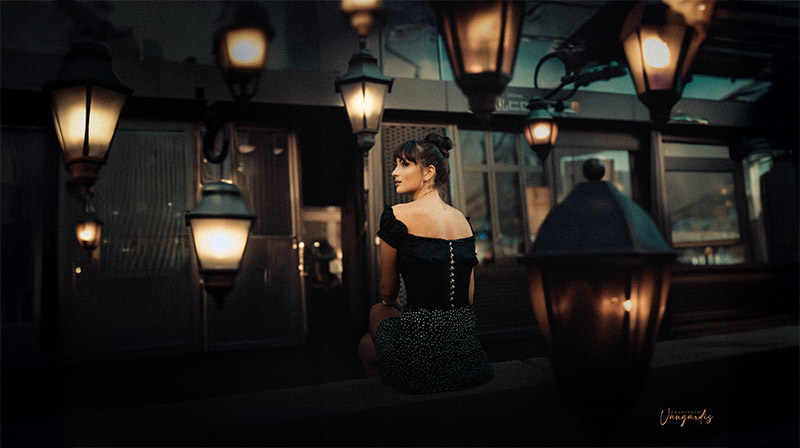
Mixing the Art of Photography and AI – An Interesting Idea
Most photographers are often resistant to change. This is probably because learning to take good photos takes time, and once you’ve developed a skillset and a personal style, the idea of having to start over—sometimes from scratch—is not exactly appealing.
In the photography community, AI (Artificial Intelligence) for generating images has not always been well received. Many believe this new technology represents (unfair) competition for professional photographers. That may be true…
But over time, I realized that in our field, advancements, changes, and evolutions often trigger reactions of rejection, defensiveness, and resistance.
The Shift to Digital Photography: A Real Challenge for the Older Generation
For those of us who experienced the film photography era, the arrival of digital cameras wasn’t exactly welcomed with open arms. Some thought digital images looked terrible, others claimed it wasn’t "real" photography, and many simply didn’t want to accept change. As a result, many photographers rejected and criticized this new technology.
The outcome? That entire generation of photographers simply disappeared! Film photography became a relic of the past, and film photographers—along with photography studios and film development businesses—vanished.
The Major Shift Brought by Social Media
Another pivotal moment in the photography world was the rise of social media. With platforms like Instagram, the entire thought process behind creating an image changed. Framing, editing techniques, and even the need to anticipate that a photo would be viewed small on a smartphone screen rather than large on a computer display—these factors completely altered the approach to photography.
Traditional photographers resisted this change as well. They criticized the oversaturated colors, the abandonment of the rule of thirds, 24mm portraits, the 4:5 format, and the gradual disappearance of landscape-oriented photos (since they are less visible on mobile screens).
But in the end, those who rejected these evolutions faded into obscurity. Today, I can almost guess a photographer’s age just by looking at their photos, and I’ve noticed that those who refused to adapt have vanished from the scene.
The Disruptive Arrival of AI-Generated Images
In the photography community, AI image generation has been met with skepticism and even hostility. Many professionals see it as unfair competition. That might be true...
At first, when I saw the first AI-generated images, my reaction was: "This sucks." But I quickly remembered that resisting evolution often leads to irrelevance.
Many of my photographer friends still think that AI creation is just about pressing a button and letting the machine do all the work. While that may sometimes be the case, I quickly realized that it’s far from that simple.
So, I asked myself: How can AI contribute to my photography practice? Eventually, I became convinced of its potential and the value it adds to the world of imagery and photography.
Why Do I Find AI Interesting?
Simply because, with patience and mastery, it becomes part of the creative process! In my approach to photography, what matters most is not just taking a photo. For me, taking a photo is just one step in a broader process—the process of creating images.
That’s why I started experimenting with Photoshop’s "Generative Fill" tool. Sure, it took quite a bit of time since I had to work in stages, but the results blew me away.
Here are some examples of images I created by blending photography and artificial intelligence:
The Original Images
My goal wasn’t to generate images from scratch using AI but rather to gradually add elements to an existing photo—to enhance it in the direction of the emotion I originally felt when I captured it.
After Several Hours of Work, Here Is the Final Result:
How AI and Photography Can Coexist to Enrich Visual Creation
Mixing the Art of Photography and AI – An Interesting Idea
Most photographers are often resistant to change. This is probably because learning to take good photos takes time, and once you’ve developed a skillset and a personal style, the idea of having to start over—sometimes from scratch—is not exactly appealing.
In the photography community, AI (Artificial Intelligence) for generating images has not always been well received. Many believe this new technology represents (unfair) competition for professional photographers. That may be true…
But over time, I realized that in our field, advancements, changes, and evolutions often trigger reactions of rejection, defensiveness, and resistance.
The Shift to Digital Photography: A Real Challenge for the Older Generation
For those of us who experienced the film photography era, the arrival of digital cameras wasn’t exactly welcomed with open arms. Some thought digital images looked terrible, others claimed it wasn’t "real" photography, and many simply didn’t want to accept change. As a result, many photographers rejected and criticized this new technology.
The outcome? That entire generation of photographers simply disappeared! Film photography became a relic of the past, and film photographers—along with photography studios and film development businesses—vanished.
The Major Shift Brought by Social Media
Another pivotal moment in the photography world was the rise of social media. With platforms like Instagram, the entire thought process behind creating an image changed. Framing, editing techniques, and even the need to anticipate that a photo would be viewed small on a smartphone screen rather than large on a computer display—these factors completely altered the approach to photography.
Traditional photographers resisted this change as well. They criticized the oversaturated colors, the abandonment of the rule of thirds, 24mm portraits, the 4:5 format, and the gradual disappearance of landscape-oriented photos (since they are less visible on mobile screens).
But in the end, those who rejected these evolutions faded into obscurity. Today, I can almost guess a photographer’s age just by looking at their photos, and I’ve noticed that those who refused to adapt have vanished from the scene.
The Disruptive Arrival of AI-Generated Images
In the photography community, AI image generation has been met with skepticism and even hostility. Many professionals see it as unfair competition. That might be true...
At first, when I saw the first AI-generated images, my reaction was: "This sucks." But I quickly remembered that resisting evolution often leads to irrelevance.
Many of my photographer friends still think that AI creation is just about pressing a button and letting the machine do all the work. While that may sometimes be the case, I quickly realized that it’s far from that simple.
So, I asked myself: How can AI contribute to my photography practice? Eventually, I became convinced of its potential and the value it adds to the world of imagery and photography.
Why Do I Find AI Interesting?
Simply because, with patience and mastery, it becomes part of the creative process! In my approach to photography, what matters most is not just taking a photo. For me, taking a photo is just one step in a broader process—the process of creating images.
That’s why I started experimenting with Photoshop’s "Generative Fill" tool. Sure, it took quite a bit of time since I had to work in stages, but the results blew me away.
Here are some examples of images I created by blending photography and artificial intelligence:
The Original Images
My goal wasn’t to generate images from scratch using AI but rather to gradually add elements to an existing photo—to enhance it in the direction of the emotion I originally felt when I captured it.
After Several Hours of Work, Here Is the Final Result:
We use cookies to improve user experience and analyze website traffic. Read about how we use cookies and how you can control them by clicking "Privacy Preferences".
Connection